
As we navigate through 2026, the manufacturing landscape faces unprecedented challenges driven by global economic shifts, environmental regulations, and technological revolutions. Rising labor costs, new tariffs on raw materials like steel and aluminum, and increasing pressure for sustainable practices have created a complex environment for both manufacturers and their customers. This comprehensive guide addresses four critical questions that are top of mind for procurement managers, engineers, and OEMs seeking reliable CNC machining partners.
In this article, we’ll explore practical, actionable solutions to these pressing challenges while maintaining the highest quality standards. From Design for Manufacturability (DFM) strategies that reduce costs to AI-powered quality assurance systems that eliminate defects, we’ll provide insights into how modern CNC machining facilities are adapting to meet these evolving demands.
Question 1: “Why Are Your Quotes Higher This Year? How Can I Reduce Per-Part Costs?”
The Challenge: Rising Costs Across the Board
The manufacturing sector is experiencing significant cost pressures in 2026 due to multiple converging factors:
- Labor cost increases: Skilled machinists and engineers command higher wages as the workforce ages and specialized knowledge becomes more valuable
- Raw material tariffs: New tariffs on steel (25% increase) and aluminum (10% increase) have directly impacted material costs
- Energy price volatility: Rising electricity and natural gas costs affect machining operations, particularly for high-precision processes
- Supply chain disruptions: Global logistics challenges have increased transportation and lead time costs
These factors have led to legitimate price increases across the industry, but there are proven strategies to mitigate cost impacts while maintaining quality.
Solution 1: Design for Manufacturability (DFM) Optimization
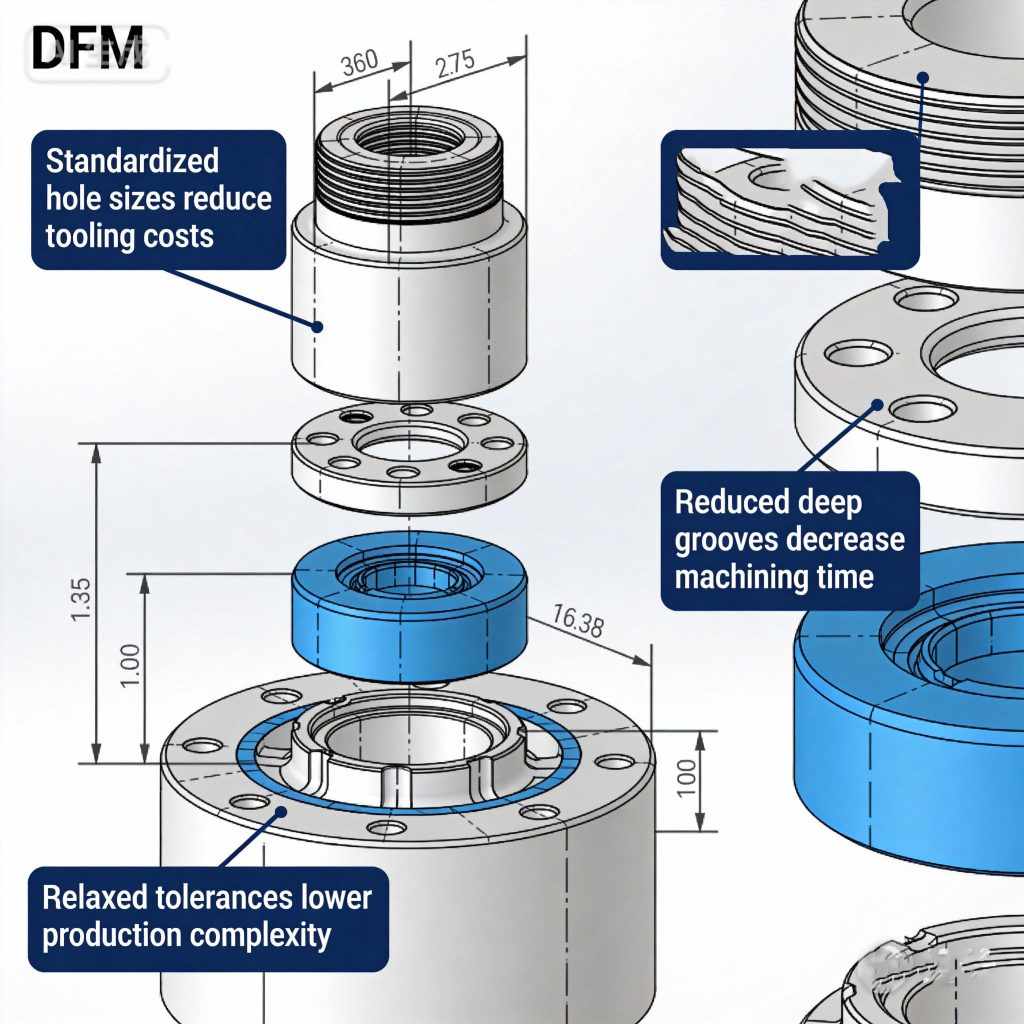
DFM is the most powerful cost-reduction tool available. Simple design modifications can yield significant savings without compromising functionality:
Standardized Hole Sizes
- Use standard drill and reamer sizes to reduce tooling costs
- Minimize the number of different hole sizes per part
- Example: Changing from 12.3mm to 12mm diameter can reduce machining time by 40%
Avoiding Deep Grooves and Thin Walls
*Deep cavities require specialized, expensive tooling and increase cycle times
*Thin walls (under 2mm for steel, under 3mm for aluminum) increase vibration risk and scrap rates
*Reducing aspect ratios can decrease machining costs by 15-25%
Relaxing Non-Critical Tolerances
- Critical dimensions: Maintain tight tolerances (±0.001mm)
- Non-critical features: Loosen to standard tolerances (±0.05mm or greater)
- This approach can reduce machining time by up to 30%
Surface Finish Optimization
- Specify Ra 1.6 or Ra 3.2 for non-visible surfaces instead of Ra 0.8 or better
- This reduces grinding/polishing operations and tooling wear
- Cost savings: 10-20% per part
[Image: DFM illustration showing standardized hole sizes, reduced deep grooves, and relaxed tolerances marked on technical drawing with cost-saving annotations. English labels visible. Modern clean engineering style.]
Solution 2: Volume-Based Pricing and Process Optimization
For stable, high-volume production runs, consider these approaches:
- Consolidate orders: Combine multiple parts into larger batches to leverage volume discounts
- Long-term contracts: Secure pricing for 12-24 months with predictable delivery schedules
- Process substitution: Evaluate if CNC milling can replace more expensive processes like investment casting or forging
- Material optimization: Consider alternative materials with similar performance but lower cost (e.g., 6061-T6 aluminum instead of 7075-T6 where strength requirements allow)
Solution 3: Value-Based Pricing Strategy
Rather than competing solely on price, consider total cost of ownership:
- Quality improvement: Higher quality parts reduce assembly time and warranty claims
- Delivery speed: Faster turnaround times reduce inventory carrying costs
- Technical support: Design review and engineering assistance can prevent costly mistakes
- Added services: Value-added operations like heat treating, coating, or assembly can reduce supply chain complexity
Real-world example: A customer saving $0.50 per part by choosing a lower-cost supplier experienced $5,000 in additional assembly costs and $2,000 in warranty claims due to quality issues—a net loss of $4.50 per part despite the lower initial price.
Question 2: “Can You Provide Carbon Footprint Certifications for My Components?”
Conclusion: We can provide carbon emission certification
The Challenge: Sustainability as a Business Imperative
2026 marks a turning point where sustainability is no longer optional—it’s a requirement. Major OEMs, particularly in aerospace, automotive, and medical device industries, now require their suppliers to provide detailed environmental data:
- Carbon footprint tracking: Scope 1, 2, and 3 emissions data
- Material waste metrics: Scrap rates and recycling efficiency
- Energy consumption: Kilowatt-hours per component produced
- Water usage: Coolant and cleaning water consumption
- Material recyclability: Documentation on alloy recovery rates
This demand stems from several pressures:
- Regulatory requirements: EU’s Carbon Border Adjustment Mechanism (CBAM) and similar regulations worldwide
- Customer demands: OEMs facing their own sustainability targets
- Investor expectations: ESG (Environmental, Social, Governance) criteria now factor into investment decisions
- Competitive advantage: Sustainability credentials increasingly differentiate suppliers

Our Solution: Comprehensive Environmental Reporting
We provide complete carbon footprint documentation for every order, including:
Carbon Emissions Breakdown
- Scope 1 emissions: Direct emissions from our operations (machines, vehicles, heating)
- Scope 2 emissions: Indirect emissions from purchased electricity
- Scope 3 emissions: Supply chain emissions including material production, transportation, and end-of-life recycling
- Total carbon footprint per component in kg CO2e
Our tracking methodology complies with:
- ISO 14064: Greenhouse gas accounting
- ISO 14067: Carbon footprint of products
- GHG Protocol: The leading global standard for carbon accounting
Green Manufacturing Initiatives
Our facility implements multiple sustainability measures that directly reduce environmental impact:
Minimum Quantity Lubrication (MQL)
- Uses 95% less coolant than traditional flood cooling
- Reduces energy consumption for coolant pumping and filtration
- Minimizes coolant waste and disposal costs
- Improves tool life and reduces metal waste
On-Site Scrap Recycling
- Real-time metal scrap collection and segregation
- Direct recycling agreements with local foundries
- 98% material recovery rate for aluminum, 95% for steel
- Closed-loop recycling for high-value alloys (titanium, Inconel)
Question 3: “Does AI-Integrated Machining Really Improve Final Product Quality?”
The Challenge: Separating Hype from Reality
“Artificial Intelligence” has become a buzzword across manufacturing, but customers rightfully question whether AI integration delivers tangible benefits. Common concerns include:
- Is this just marketing?: Distinguishing genuine AI capabilities from automated programming
- What’s the ROI?: Understanding if the investment justifies the cost
- Reliability: Trusting AI systems with critical quality requirements
- Implementation complexity: Integration with existing processes and systems
The truth is that properly implemented AI integration in CNC machining delivers measurable, quantifiable improvements in quality, consistency, and efficiency.

How AI Integration Improves Quality
Our AI-powered machining systems provide four key quality benefits:
1. Real-Time Tool Wear Monitoring
- Problem: Tools wear unpredictably, leading to dimensional drift and surface finish degradation
- AI Solution: Sensors monitor spindle load, vibration, and acoustic emissions to detect tool wear in real-time
- Result: Automatic tool change at optimal time, preventing quality issues and reducing tooling costs by 20-30%
2. Thermal Expansion Compensation
- Problem: Heat generated during machining causes thermal expansion, affecting dimensional accuracy
- AI Solution: Temperature sensors and thermal modeling predict and compensate for expansion in real-time
- Result: Consistent dimensional accuracy regardless of machining duration, maintaining ±0.001mm tolerances
3. Adaptive Process Control
- Problem: Material variations, vibration, and other variables cause inconsistency between parts
- AI Solution: Algorithms adjust cutting parameters (speed, feed, depth) based on real-time feedback
- Result: First part = 1,000th part quality, eliminating batch-to-batch variation
4. Predictive Quality Assurance
- Problem: Quality issues often detected after machining, leading to scrap and rework
- AI Solution: Predictive analytics identify potential quality issues before they occur
- Result: Proactive intervention reduces scrap rates by 40-60%
[Image: AI sensors and monitoring screens on CNC machine displaying real-time tool wear detection and thermal compensation data. Self-correction process visualization with charts showing first part vs thousandth part consistency. High-tech manufacturing setup.]
Measurable Quality Improvements
Here’s the data from our AI-integrated operations over the past 18 months:
| Quality Metric | Before AI | After AI | Improvement |
| Scrap rate | 2.5% | 1.0% | 60% reduction |
| First article yield | 85% | 97% | 14 percentage points |
| Average tolerance achievement | 95% | 99.2% | 4.2 percentage points |
| Surface finish consistency (Ra) | ±0.2 | ±0.05 | 75% improvement |
| Tool life utilization | 70% | 95% | 36% improvement |
Real-World Application Case
Aerospace bracket manufacturing example:
- Требования: допуск ±0,001 мм, шероховатость поверхности Ra 0,8, производительность 5000 деталей в год.
- До внедрения ИИ: процент брака 2,81 тонны на тонну, 7 часов доработки на 100 деталей, средняя смена инструмента каждые 35 деталей.
- После внедрения ИИ: процент брака 0,91 TP2T, 1,5 часа доработки на 100 деталей, средняя смена инструмента каждые 52 детали.
- Ежегодная экономия: $85 000 за счет сокращения брака, $42 000 за счет сокращения доработок, $28 000 за счет экономии на оснастке.
- Общая окупаемость инвестиций: 155 000 в год экономии на инвестициях в оборудование в размере $220 000 (окупаемость за 17 месяцев)
Подход к реализации
Наша интеграция с ИИ происходит плавно и прозрачно:
- Никаких изменений от заказчика не требуется: существующие файлы САПР, чертежи и спецификации работают без изменений.
- Прозрачная отчетность: качественные данные и прогнозы ИИ доступны на панелях мониторинга в режиме реального времени.
- Постепенная реализация: функции ИИ активируются поэтапно, что позволяет проверять производительность на каждом этапе.
- Экспертный контроль: инженеры-люди отслеживают и утверждают решения ИИ, сохраняя контроль и одновременно извлекая выгоду из автоматизации.
Результат: повышение качества без увеличения сложности или рисков для клиента.
Вопрос 4: «Как обрабатывать [конкретный новый сплав] без деформации или зон термического воздействия?»
Задача: для создания современных материалов требуются современные технологии.
Развитие электромобилей, инновации в аэрокосмической отрасли и прорывы в разработке медицинских устройств вывели на передний план сложные материалы:
- Инконель 718: никель-хромовый сплав с исключительной прочностью при высоких температурах, но плохой обрабатываемостью.
- Титановые сплавы (Ti-6Al-4V): обладают превосходным соотношением прочности к весу, но склонны к упрочнению при деформации и накоплению тепла.
- Композиты с керамической матрицей: обладают исключительной твердостью и износостойкостью, но хрупкие и трудно поддаются резке.
- Материалы для аддитивного производства: детали, напечатанные на 3D-принтере и требующие высокоточной обработки на станках с ЧПУ.
- Высокоэнтропийные сплавы: перспективные материалы с уникальными свойствами, но непредсказуемым поведением при механической обработке.
Типичные проблемы обработки материалов:
- Деформация и искривление: остаточные напряжения от механической обработки вызывают неточности размеров.
- Зоны термического воздействия (ЗТВ): термические повреждения влияют на свойства материала и целостность поверхности.
- Износ инструмента: абразивные материалы быстро приводят к износу режущих инструментов.
- Трудности обработки поверхности: достижение требуемых значений Ra на твердых, вязких или реактивных материалах.
- Упрочнение при обработке: Некоторые материалы становятся тверже при резке, что создает порочный круг повреждения инструмента.
Наш подход: Специализированные знания в конкретной области.
Мы поддерживаем обширные базы данных по механической обработке и проверенные стратегии для более чем 50 современных материалов:
Экспертиза материалов по категориям:
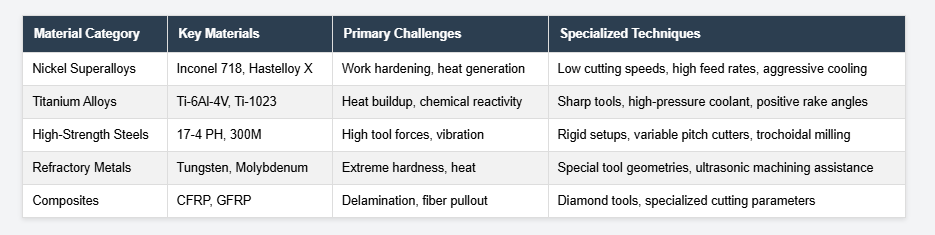
Усовершенствованная система охлаждения и терморегулирования.
Для термочувствительных материалов и предотвращения зоны термического воздействия мы используем следующие методы:
Системы охлаждения высокого давления
- Давление до 1000 фунтов на квадратный дюйм для эффективного отвода тепла.
- Точное наведение сопла для оптимального охлаждения в зоне резания
- Температура охлаждающей жидкости поддерживается на уровне 20±2°C.
Подача охлаждающей жидкости через шпиндель
- Охлаждающая жидкость подается непосредственно через шпиндель и режущий инструмент.
- Обеспечивает стабильное охлаждение даже в глубоких полостях и внутренних элементах.
- Снижает температуру инструмента на 30-401 TP2T по сравнению с охлаждением потоком воздуха.
Криогенное охлаждение (для отдельных областей применения)
- Охлаждение жидким азотом или CO2 для экстремально высоких температур.
- Полностью исключает термическую деформацию.
- Увеличивает срок службы инструмента на 200-400% при обработке титана и инконеля.
[Изображение: Обработка на станке с ЧПУ аэрокосмического компонента из сплава Inconel 718, демонстрирующая усовершенствованную систему охлаждения с несколькими соплами для подачи охлаждающей жидкости, отводом стружки и контролируемым тепловым режимом. Высокоточная обработка с контролем температуры. Профессиональная промышленная сцена.]
Гибридное производство: аддитивные технологии + ЧПУ
Сочетание 3D-печати и обработки на станках с ЧПУ открывает уникальные возможности и создает определенные проблемы:
Преимущества гибридного производства:
- Сложные геометрические формы: внутренние каналы и решетчатые структуры, которые невозможно обработать из цельного куска материала.
- Экономия материала: сначала создается деталь, близкая к окончательной форме, а затем обрабатываются критически важные поверхности.
- Свобода проектирования: объединение нескольких деталей в единые компоненты.
Наши возможности гибридной финишной обработки:
- Печать с получением деталей, близких к окончательной форме: аддитивное производство позволяет создавать детали с точностью до 0,5 мм от окончательных размеров.
- Высокоточная обработка на станках с ЧПУ: окончательная обработка обеспечивает допуск ±0,001 мм на критически важных поверхностях.
- Удаление опорных конструкций: Стратегическое удаление напечатанных на 3D-принтере опор без повреждения геометрии детали.
- Улучшение качества поверхности: с Ra 6,3 (после печати) до Ra 0,8 или лучше после механической обработки.
Интеграция процессов:
- 3D-печать: создание деталей, близких к окончательной форме, с использованием соответствующих технологий (DMLS, EBM, SLM).
- Термообработка: снятие внутренних напряжений и достижение требуемых свойств материала.
- Станок с ЧПУ: обработка критически важных поверхностей, базовых элементов и интерфейсов.
4. Контроль качества: Проверка точности размеров и целостности материала.
5. Постобработка: Нанесение поверхностных покрытий, защитных составов или текстурирование по мере необходимости.
Управление и мониторинг технологических процессов
Для современных материалов требуется усиленный контроль технологического процесса:
Датчики, встроенные в производственный процесс
- Датчики силы контролируют усилие резания, предотвращая перегрузку.
- Датчики акустической эмиссии обнаруживают износ инструмента и вибрацию.
- Датчики температуры контролируют выделение тепла в зоне резки.
- Датчики вибрации выявляют проблемы со стабильностью процесса.
Адаптивные системы управления
- Корректировка параметров в реальном времени на основе данных с датчиков.
- Автоматическая оптимизация скорости подачи для поддержания постоянной силы резания.
- Защита инструмента путем немедленного снижения параметров при обнаружении перегрузки.
- Прогнозирование качества на основе закономерностей в технологических данных
Документирование и отслеживаемость
- Полные записи параметров процесса для каждой детали.
- Документация по сертификации материалов и термообработке
- Отслеживание использования и износа инструментов
- Отчеты о контроле качества с полной прослеживаемостью
Пример из практики: лопатка турбины из сплава Inconel 718.
Задача: Изготовление лопатки турбины из сплава Inconel 718 с допусками ±0,002 мм, шероховатостью поверхности Ra 0,8, без зон термического воздействия, влияющих на свойства материала.
Реализованное решение:
- Инструмент: твердосплавная концевая фреза с покрытием TiAlN, 6-канавочная конструкция.
- Параметры: скорость резания 35 м/мин, подача 0,08 мм/зуб, осевая глубина 0,5 мм.
- Охлаждение: подача охлаждающей жидкости под высоким давлением (800 psi) через шпиндель, температура 18°C.
- Стратегия: черновая обработка трохоидальным фрезерованием, чистовая обработка попутным фрезерованием.
- Мониторинг: датчики силы и акустической эмиссии в реальном времени с адаптивным управлением.
Результаты:
- Точность размеров: 99,71 TP2T деталей в пределах допуска ±0,001 мм.
- Чистота поверхности: среднее значение Ra 0,72, максимальное значение Ra 0,8 (по техническим характеристикам).
- Время работы инструмента: 45 минут (против среднего показателя по отрасли в 25 минут)
- Время цикла: 18 минут на деталь.
- Отсутствие брака, произведено более 500 деталей.
Дополнительные услуги и возможности
Помимо ответа на эти четыре важнейших вопроса, мы предоставляем комплексные услуги по обработке на станках с ЧПУ:
Материальные возможности
- Металлы: алюминий, нержавеющая сталь, титан, никелевые сплавы, медные сплавы, инструментальные стали, углеродистые стали.
- Пластмассы: ABS, PEEK, Delrin, PTFE, UHMW, акрил
- Композитные материалы: углеродное волокно, стекловолокно, материалы, армированные кевларом.
- Специальные сплавы: хастеллой, монель, васпалой, сплавы, изготовленные на заказ.
Возможности оборудования
- 5-осевое фрезерование на станках с ЧПУ: сложные геометрические формы за одну установку.
- Токарная обработка на станках с ЧПУ: прецизионные вращательные детали диаметром до 600 мм.
- Электроэрозионная обработка: проволочная и погружная электроэрозионная обработка твердых материалов и сложных элементов.
- Шлифовка: прецизионная поверхностная, цилиндрическая и бесцентровая шлифовка.
- Лазерная резка: возможности резки листового металла и труб.
Гарантия качества
- Сертификаты: ISO 9001:2015, AS9100D (аэрокосмическая отрасль), IATF 16949 (автомобильная промышленность)
- Контрольно-измерительное оборудование: координатно-измерительные машины, оптические компараторы, измерители шероховатости поверхности, твердомеры.
- Первичная проверка образцов: Подробные отчеты о первичной проверке образцов для всех новых проектов.
- Статистический контроль процессов: мониторинг СПК в ходе производственных циклов.
Дополнительные услуги
- Помощь в проектировании: анализ DFM-моделирования и рекомендации по оптимизации.
- Прототипирование: Быстрое прототипирование с полной документацией для перехода к серийному производству.
- Сборка: механическая сборка, сборка узлов и окончательная сборка.
- Обработка поверхности: Анодирование, гальваническое покрытие, нанесение покрытий, термообработка.
- Логистика: доставка точно в срок, управление запасами, программы рамочных заказов.
Часто задаваемые вопросы
Общие вопросы
В: Какие форматы файлов вы принимаете?
A: Мы принимаем все основные форматы САПР, включая STEP, IGES, Parasolid, SolidWorks (.sldprt, .sldasm), AutoCAD (.dwg, .dxf), Catia, NX и PDF-чертежи. Если у вас другой формат, свяжитесь с нами, чтобы обсудить совместимость.
В: Каков ваш минимальный объем заказа?
А: У нас нет минимального объема заказа. Независимо от того, нужен ли вам один прототип или миллионы серийных деталей, мы можем удовлетворить ваши требования, предложив подходящую структуру затрат для каждого уровня объема.
В: Сколько времени обычно занимает обработка на станке с ЧПУ?
А: Сроки выполнения зависят от сложности и объема работ:
- Создание простых прототипов: 3-5 рабочих дней
- Изготовление сложных прототипов: 5-10 рабочих дней.
- Срок выполнения производственного заказа: 2-4 недели в зависимости от объема и сложности.
- Для срочных проектов доступно ускоренное обслуживание.
В: Вы предоставляете сертификаты на материалы?
A: Yes, full material certifications and traceability documentation are provided with every order at no additional cost. This includes mill test reports, heat treatment certificates, and material lot traceability.
Cost-Related Questions
Q: Can you provide cost breakdowns for quotes?
A: Yes, we provide detailed quote breakdowns including material costs, programming costs, machine time costs, and any additional services requested. This transparency helps identify cost-saving opportunities.
Q: Do you offer volume discounts?
A: We offer tiered pricing based on order volume and projected annual quantities. Long-term blanket orders with release schedules receive the most favorable pricing.
Q: What payment terms do you offer?
A: Standard terms are 50% deposit with order, 50% net 30 days upon completion. Established customers with credit approval receive net 30 terms. We accept wire transfers, ACH, and credit cards (3% processing fee).
Quality-Related Questions
Q: How do you handle quality issues?
A: Our zero-defect approach includes:
- Pre-production approval of first articles
- Statistical process control during production
- Post-production inspection documentation
- Immediate corrective action plans for any issues
- Root cause analysis and preventive action implementation
Q: What is your scrap rate?
A: Our overall scrap rate is 1.0%, varying by material and complexity. High-volume, mature programs achieve scrap rates below 0.5%.
Q: Can you handle special quality requirements (FAI, PPAP, ITAR)?
A: Yes, we have extensive experience with:
- AS9100 First Article Inspection reports
- Automotive PPAP submissions (Level 1-5)
- ITAR registration for defense and aerospace projects
- NADCAP processes for specialized industries
Sustainability Questions
Q: Can you help me calculate the carbon footprint of my entire product?
A: Yes, we can provide cradle-to-gate carbon footprint calculations including raw material extraction, processing, manufacturing, and packaging. For cradle-to-grave calculations, we partner with lifecycle assessment specialists.
Q: Do you use recycled materials?
A: We use recycled materials wherever feasible and approved by customers. Our aluminum stock is typically 90% recycled content, and we maintain strict separation of recycled and virgin materials for customers with specific requirements.
Q: What environmental certifications do you hold?
A: We hold ISO 14001:2015 environmental management certification and are registered with various environmental compliance programs. We can provide detailed environmental reports upon request.
Заключение
The CNC machining landscape in 2026 presents significant challenges, but also opportunities for manufacturers who can adapt and innovate. The four critical questions addressed in this article—cost management, sustainability reporting, AI integration, and advanced material machining—represent the forefront of manufacturing evolution.
Основные выводы:
- Cost control through DFM: Simple design optimizations can reduce machining costs by 15-40% without compromising quality
- Sustainability is mandatory: Carbon footprint reporting and green manufacturing are now competitive requirements, not optional enhancements
- AI delivers measurable ROI: Properly implemented AI integration reduces scrap by 40-60% and improves first article yield by 14+ percentage points
4. Advanced materials require expertise: Specialized knowledge, equipment, and processes are essential for successful machining of challenging alloys
Why Choose Our Услуги по обработке с ЧПУ?
- 20+ years of experience across aerospace, automotive, medical, and industrial applications
- Comprehensive capabilities from rapid prototyping to high-volume production
- Technology leadership with AI-integrated machining and advanced material expertise
- Quality assurance backed by ISO 9001, AS9100D, and IATF 16949 certifications
- Sustainability commitment with full carbon footprint reporting and green manufacturing initiatives
- Customer-focused approach with transparent pricing, responsive communication, and collaborative problem-solving
The manufacturing challenges of 2026 require partners who combine technical expertise with business acumen and environmental responsibility. We’re ready to help you navigate these challenges and achieve your manufacturing goals.
Call to Action
Ready to discuss your CNC machining needs or learn more about how our capabilities can address your specific challenges?
Get Started Today:
- Request a Quote: Submit your CAD files and requirements for a detailed, transparent quotation
- Schedule a Consultation: Speak with our engineering team about design optimization and material selection
- Tour Our Facility: Visit our manufacturing facility to see our capabilities firsthand
- Technical Support: Access our engineering team for design reviews and machining advice

 Russian
  English
  French
  Italian
  German
  Spanish
  Portuguese
  Arabic
  Japanese